

AndaSeat Publishes Phantom 4 Series Design Brief on Changing Seated Positions
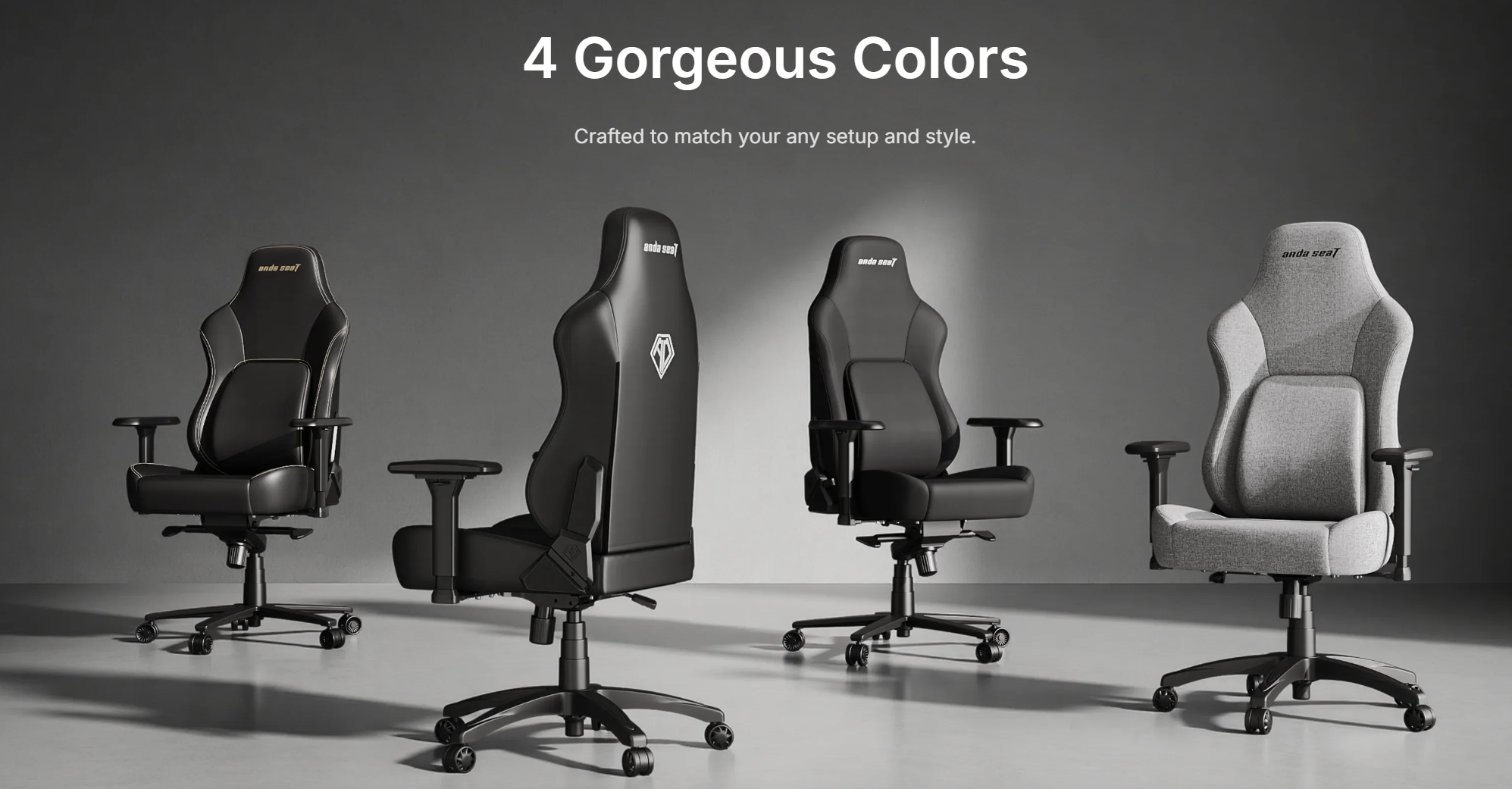
AndaSeat Phantom 4
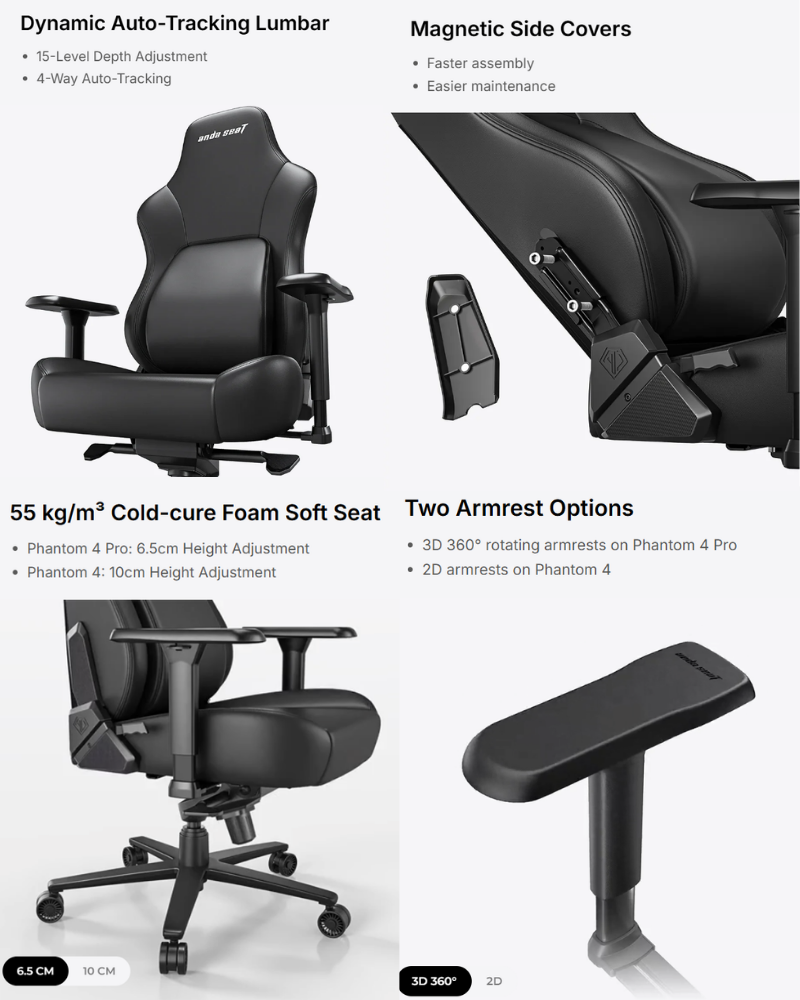
AndaSeat Phantom 4 Key Feature
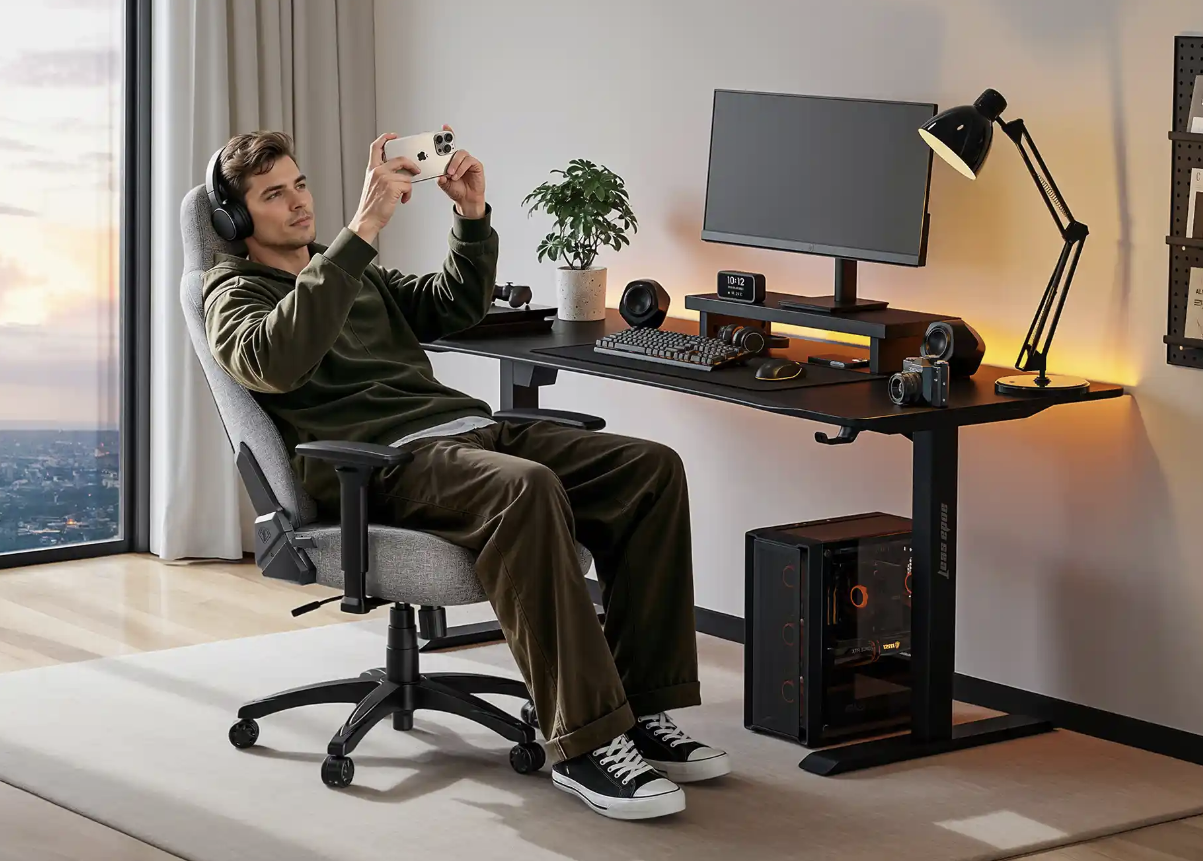
AndaSeat Phantom 4
AndaSeat Publishes Phantom 4 Series Design Brief on Changing Seated Positions
SPOKANE, WA, UNITED STATES, July 30, 2026 /EINPresswire.com/ -- AndaSeat today published a design brief explaining the development approach behind the Phantom 4 Series and its systems for lumbar contact, recline and user fit. The brief focuses on how the chair changes mechanically when a person moves between upright work, communication, reading, gaming and more reclined activities.The company said the brief is intended to distinguish adjustable seating functions from medical or posture-correction claims. The Phantom 4 Series does not diagnose seating problems, prescribe a correct position or replace regular movement away from a workstation. Instead, the design uses adjustable contact points and several supported angles to reflect that seated tasks do not always place the body in the same position.
Both Phantom 4 and Phantom 4 Pro use the same dynamic lumbar structure, 15-level lumbar-depth range, recline limit and rocking range. The models differ in their armrests, head pillows, tilt mechanisms and several supporting components.
Design Brief Defines the Role of Variable Support
The Phantom 4 Series was developed around changes in the relationship between the user and the chair during a seated session. A person may sit closer to the desk while typing, move one arm outward while using a mouse, lean back during a call or shift laterally when reaching for an item. Each movement changes where the back, hips, thighs and arms meet the chair.
The design brief treats these changes as a mechanical fit question. A fixed surface remains in the same place as the user moves, while an adjustable surface can be repositioned. The Phantom 4 Series applies this approach through lumbar-depth settings, limited following movement, recline, rocking and model-specific fit controls.
AndaSeat does not identify one setting as correct for every user. Body dimensions, desk height, screen position, task duration and personal preference can affect how a setting feels. A configuration used for keyboard work may differ from one used during controller-based gaming or reclined viewing.
“The purpose of this design brief is to explain what the mechanisms do and where their limits are,” said Lin Zhou, CEO of AndaSeat. “The Phantom 4 Series allows the user to change the level and angle of contact with the chair, but it does not define a universal posture or replace standing, walking and other movement during the day.”
The brief also separates chair adjustment from healthcare advice. The lumbar, recline and fit systems are described as furniture mechanisms. AndaSeat is not presenting the Phantom 4 Series as a therapeutic device or claiming that a setting will prevent, treat or correct a medical condition.
Lumbar and Recline Systems Respond to Position Changes
The central mechanism in both models is the dynamic auto-tracking lumbar section. It includes 15 locking depth positions across a stated range of 0 to 95 mm. The lumbar surface can be extended when more contact is preferred or moved inward when less projection is wanted.
When extended, the section can move approximately 5 degrees to either side and tilt through a 25-degree forward-and-back range. This limited movement changes the orientation of the contact surface when the user shifts within the chair. The mechanism operates within defined angles and remains part of the backrest.
The lumbar function adjusts the location and amount of lower-back contact. It does not evaluate posture, score a sitting position or automatically select a setting. Adjustment remains under the user’s control.
Both models recline to 135 degrees and include a 15-degree rocking range. Recline changes the angle between the seat and backrest, while rocking permits smaller movement within the mechanism’s available range.
The Phantom 4 Pro includes a multi-function tilt mechanism that can lock the rocking movement at a selected position. The standard Phantom 4 uses a butterfly tilt mechanism with adjustable rocking tension. Movement within either chair remains separate from active breaks away from the desk.
The seat uses 55 kg/m³ cold-cure foam as its base material. The specification describes the foam density and construction method; it is not presented as evidence of a health outcome.
The series is specified for users approximately 150 to 185 cm in height and up to 120 kg, subject to body proportions and individual fit. These measurements provide general product-sizing information rather than a guarantee that every person within the stated range will use the same settings.
Shared Core Design Separates the Two Models
Phantom 4 and Phantom 4 Pro share the lumbar system, 135-degree recline, 15-degree rocking range and cold-cure foam seat. Their differences are concentrated in the controls and supporting components around that shared structure.
Phantom 4 Pro uses 3D armrests with 360-degree rotational positioning, approximately 6 cm of forward-and-back movement and 7 cm of height adjustment. The armrests can be repositioned when the user changes desk distance, input device or recline angle.
The Pro model also includes a magnetic memory-foam head pillow with a gel layer and an attachment range of approximately 20 cm. Its tilt mechanism provides 6.5 cm of seat-height adjustment and can lock the rocking function.
The standard Phantom 4 uses 2D armrests with forward-and-back and vertical adjustment. It includes a memory-foam head pillow attached by an elastic strap and a butterfly tilt mechanism with 10 cm of seat-height adjustment.
Both models use 60 mm polyurethane-coated casters and are available with leather or linen upholstery. Magnetic side covers provide access to the backrest connection points during assembly or maintenance. Upholstery, color and component configurations may vary by region.
The design brief does not describe the Pro model as appropriate for every user or task. Its additional controls provide a different adjustment range, while the standard model retains the core lumbar and recline system with fewer peripheral settings. The distinction concerns configuration rather than a universal ranking between the two chairs.
By publishing the brief, AndaSeat is placing the Phantom 4 Series within a product-development discussion about seating that can be reconfigured as tasks change. The company’s position is that a chair can provide several mechanical settings without presenting one posture as universally correct.
The Phantom 4 Series is therefore described in terms of movement range, contact adjustment, fit and model configuration. The chairs are not presented as substitutes for workstation setup, regular breaks, physical activity or professional medical advice.
AndaSeat said future product communications will continue to separate measurable product specifications from individual comfort preferences and health-related claims. The Phantom 4 Series design brief is intended to provide journalists, workspace professionals and users with a clearer explanation of how the chair’s main mechanisms operate and how the two available configurations differ.
About AndaSeat
Founded in 2007, AndaSeat develops seating, desks, monitor arms and related workspace products for gaming, professional and home environments.
Caroline Chen
AndaSeat
+86 139 2232 2347
email us here
Visit us on social media:
LinkedIn
Instagram
Facebook
YouTube
TikTok
X
Legal Disclaimer:
EIN Presswire provides this news content "as is" without warranty of any kind. We do not accept any responsibility or liability for the accuracy, content, images, videos, licenses, completeness, legality, or reliability of the information contained in this article. If you have any complaints or copyright issues related to this article, kindly contact the author above.
